


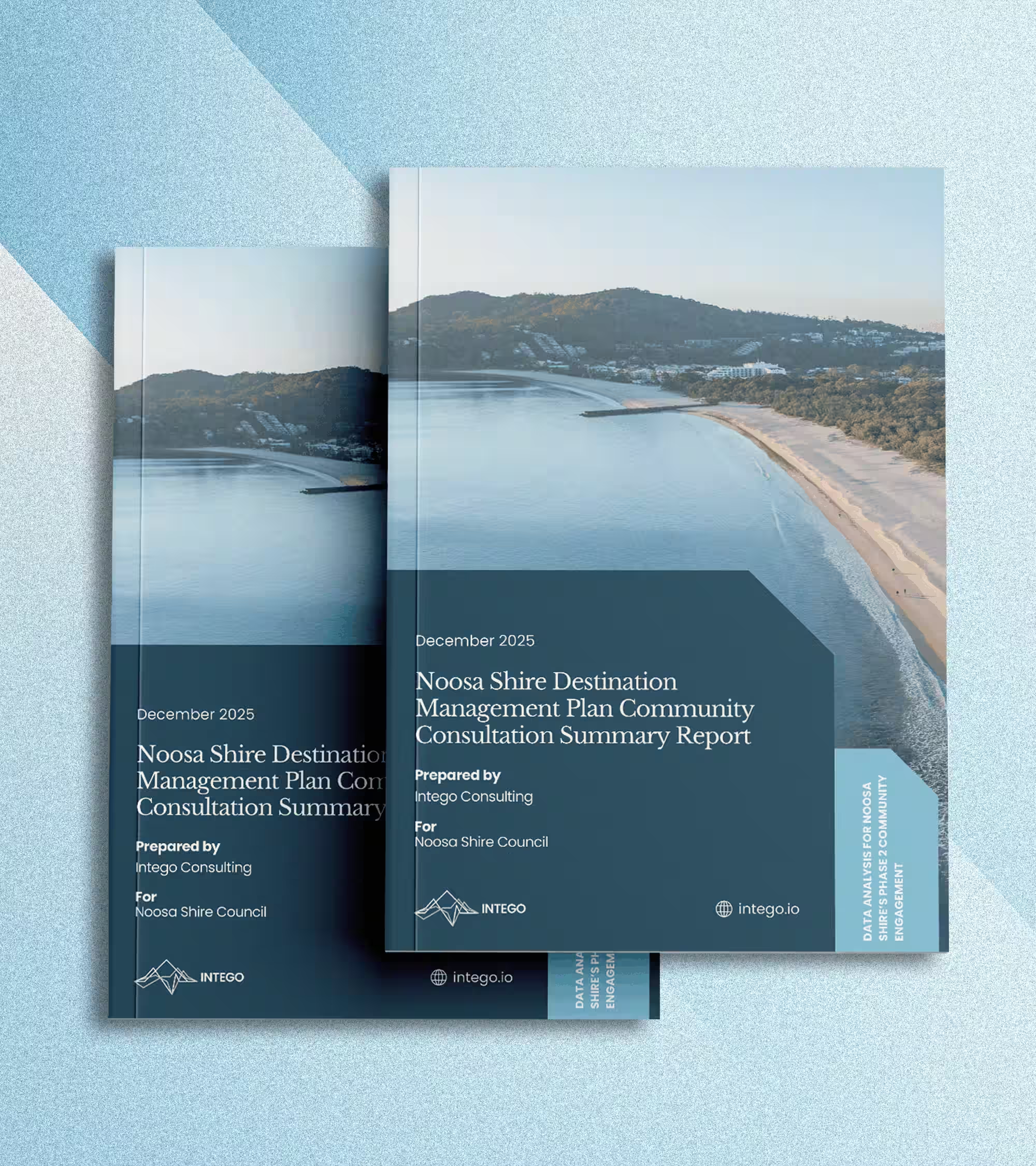
Supporting regional development for a regenerative future
Planning for Regenerative Tourism in Noosa: Phase 2 Community Engagement
Using best practice quantitative and qualitative analysis, we supported Noosa Council in building the evidence and social license required to finalise their community-led Destination Management Plan, which aspires to a regenerative tourism future in Noosa.
CLIENT: Noosa Shire Council
INDUSTRY: Tourism and local government
LOCATION: Noosa Shire, Queensland, Australia
SERVICES: Place-based research informed by social science; quantitative and qualitative research and data analysis; executive presentations and reporting
The Challenge: Securing Social License for Noosa’s Destination Management
As a result of significant tourism growth, particularly since COVID-19, tourism in Noosa represents a highly contested industry, with community sentiment towards tourism eroding. Noosa Council set out to create a Destination Management Plan that addresses challenges associated with tourism growth and aspires to build a regenerative tourism future in Noosa.
Phase 1 of the community engagement concluded in 2024, with Intego conducting the data analysis of the generated data. Informed by this analysis, Council created a draft Destination Management Plan (DMP) with a proposed vision, four guiding principles, and multiple actions to guide tourism management.
The draft DMP was made publicly available, and a second stage of community engagement was conducted to gather community input for the final DMP.
Given that tourism in Noosa represents a high-stakes policy space, Council needed to ensure the final DMP secured a robust social license, transforming a highly contested environment into a clear mandate to act through transparent, defensible engagement that mitigated the risk of community backlash, while incorporating regenerative tourism principles.
Key Deliverables

Data transformation and statistical weighting
Converted fragmented data into a high-integrity “single source of truth” by reconciling survey inconsistencies and applying demographic weighting to ensure a representative, defensible evidence base.

Mixed-methods data analysis
Delivered deep-dive quantitative analytics and AI-enhanced qualitative coding to distil thousands of community responses into a clear numerical mandate and actionable strategic themes.

Stakeholder analysis
Mapped sentiment across geographic regions and industry cohorts to identify specific areas of alignment and friction, allowing for highly targeted policy and communication strategies.

Best practice research advisory
Provided strategic oversight aligned with national research codes to ensure the analytical process was ethically sound, academically rigorous, and capable of withstanding intense public scrutiny.

Multi-level strategic reporting
Produced a comprehensive suite of outputs, including an executive briefing for leadership, a technical report with 23 evidence-based recommendations, and a transparent summary to secure community social license.
The Approach: Best-Practice Research for Place-Based Change
We used a rigorous mixed-methods approach, integrating quantitative and qualitative data from the community engagement period. Overall, we navigated a complex high-volume dataset that included the following engagement tools:
• 10 community information sessions
• 6 coffee chats
• 12 stakeholder information sessions
• 4 school sessions with youth leaders (Mentimeter)
• 2 market pop-ups
• 131 formal submissions
• 2 survey instruments


Building an Unassailable Evidence Base
Policymaking requires an unassailable evidence base, so we focused on:
• Data integrity: We cleaned and transformed fragmented data into a high-integrity dataset. We applied post-stratification weighting to correct for participation bias, ensuring results were statistically representative of Noosa’s population.
• Best-practice quantitative data analysis: We analysed quantitative data with frequency distribution. We identified dominant opinions, detected variation between stakeholder groups, and provided an empirical foundation for broader community sentiment.
• AI-assisted, but human-owned qualitative data analysis: We leveraged AI for efficiency but maintained strict human oversight. After identifying limitations in initial AI outputs, we manually validated results to rectify errors and ensure findings were accurately captured.
• Independent validation and due diligence: We provided an independent ‘sense-check’ of Council’s submissions analysis, adding an extra layer of rigour and confidence.
“Intego undertook a comprehensive and methodologically rigorous analysis of a substantial volume of community feedback. Applying contemporary analytical frameworks, they delivered an insightful, detailed, and evidence-based report that proved instrumental in informing Council’s strategic direction and decision-making. The development of the Noosa Destination Management Plan was a complex and, at times, highly sensitive undertaking. The Intego team demonstrated exceptional professionalism, technical expertise, and sound judgement in navigating these challenges across both phases of the project. Throughout our engagement, Intego consistently displayed a highly collaborative and adaptable approach. They demonstrated considerable flexibility in responding to evolving project requirements and delivered outcomes that exceeded expectations and represented outstanding value.”

Lynne Banford
Manager, Economic Development and Destination Management, Noosa Council
The Result: Policymaking for Place Stewardship Grounded on Rigorous Evidence
We gave Noosa Council strategic clarity and defensible evidence to move a contested plan toward finalisation. Outcomes included:
• Policy leadership and decision-making backed by evidence: Translated over 900 inputs into 23 strategic recommendations, providing a clear roadmap that balances community aspirations with bold policy leadership.
• A clear mandate to act: Identified “quick wins” for actions receiving over 80% support. This gave Council evidence-based momentum to build immediate community trust.
• Clarity on ‘thorny’ topics: By identifying dominant, recurring themes across all open-ended questions, we moved the conversation from subjective sentiment to a concrete mandate for decision-making.
• Tactical implementation guidance: We provided actionable guidance on the tone, structure, and focus areas of the final DMP, ensuring the document resonates with stakeholders and place stewardship for Noosa.


More Case Studies
Regenerative Leadership in Sweden: A Team-Wide Training Workshop
Intego delivered a regenerative leadership workshop for Swedish innovation hub, Bizmaker, to spark place-based change in Västernorrland.
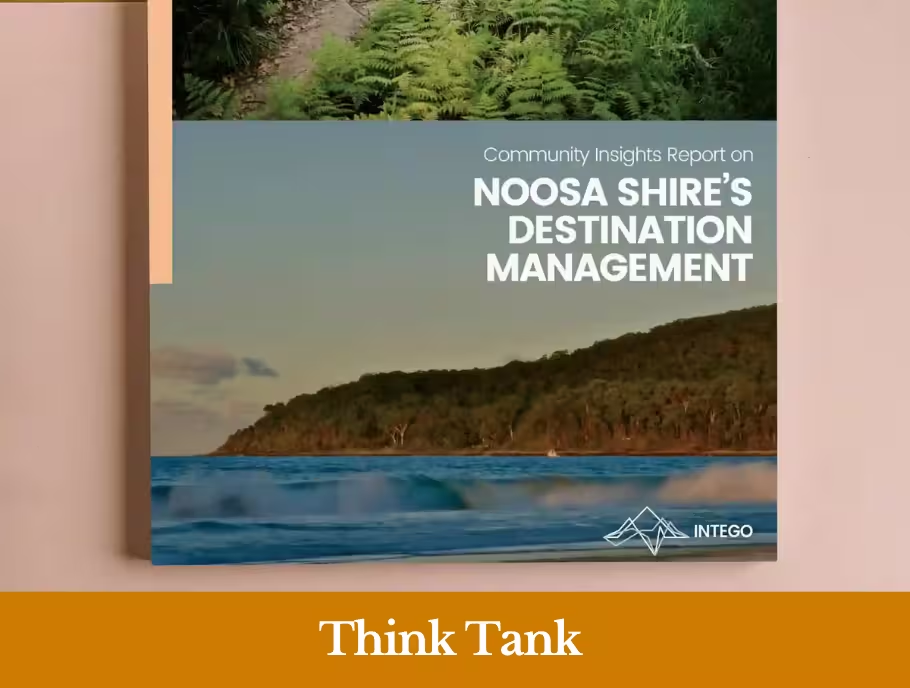
Community Engagement for Regenerative Tourism in Noosa Shire: Phase 1
From community voices to actionable insights, Intego’s analysis is helping shape Noosa’s Destination Management Plan and its aspirations for regenerative tourism in Noosa.